The coldest temperature ever recorded on Earth
Minus 89.2 °C at Vostok in 1983 is the official record. Satellites have seen colder, and each country has a record of its own. All of them with a date and a source.
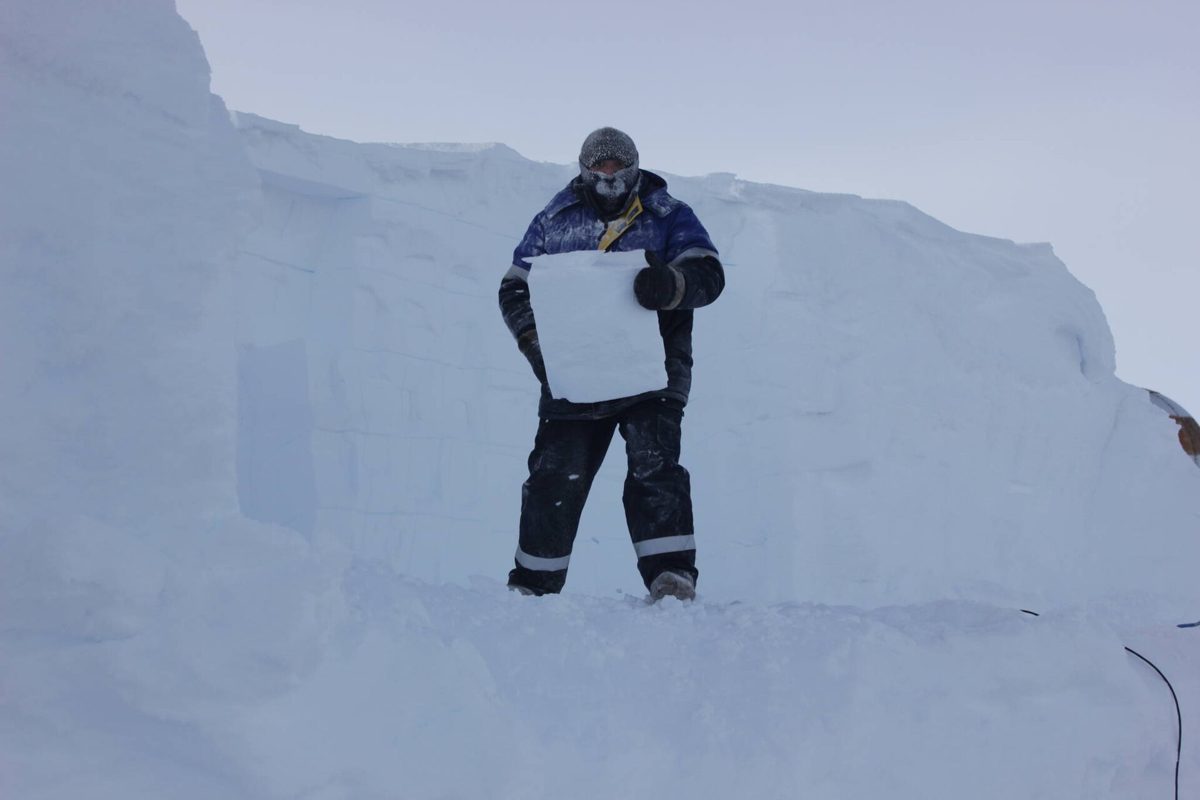
The coldest air temperature ever measured by a thermometer on Earth is −89.2 °C (−128.6 °F), recorded at the Soviet Vostok Station on the East Antarctic plateau on 21 July 1983. That is the record recognised by the World Meteorological Organization, whose archive of weather extremes only accepts readings from calibrated instruments at standard height. Satellites have measured surface temperatures far lower, but those are a different kind of measurement.
Why Vostok, and why July
Vostok sits at 3,488 metres on an ice dome, about 1,300 km from the coast. Three things make it the coldest place with a thermometer: altitude, the polar night (no sun for months, so the surface radiates heat away without any coming back), and the plateau shape, which lets the coldest, densest air pool. July is midwinter in the southern hemisphere, and the record came on a clear, calm night after weeks of darkness.
Colder still, if you count satellites
In 2013, NASA and university researchers analysing Landsat and MODIS satellite data found surface temperatures of about −93 °C in hollows on the ridge between Dome Argus and Dome Fuji. A 2018 reanalysis of the same data (Scambos and colleagues, Geophysical Research Letters) put the coldest snow surfaces at around −98 °C, and estimated air temperature two metres above at about −94 °C. Those are surface skin temperatures measured from orbit, not air temperatures from a thermometer, so the WMO does not list them as records. They do show how close the plateau comes to the physical limit set by how fast air can radiate heat away.
The coldest in the Northern Hemisphere
The northern record is −69.6 °C, measured by an automatic weather station at Klinck, near the summit of the Greenland ice sheet, on 22 December 1991. The reading sat in an archive for almost three decades until climate historians recovered it; the WMO verified it in 2020. It beat the long-standing records from Siberia: −67.8 °C at Verkhoyansk (1892) and at Oymyakon (1933), the two towns that still fight over the title of coldest inhabited place.
National records
| Country | Record | Where and when |
|---|---|---|
| United States | −62.2 °C (−80 °F) | Prospect Creek, Alaska, 23 January 1971 |
| Canada | −63.0 °C (−81.4 °F) | Snag, Yukon, 3 February 1947 |
| United Kingdom | −27.2 °C (−17 °F) | Braemar, 11 February 1895 and 10 January 1982; Altnaharra, 30 December 1995 |
| Australia | −23.0 °C (−9.4 °F) | Charlotte Pass, New South Wales, 29 June 1994 |
| New Zealand | −25.6 °C (−14.1 °F) | Ranfurly, Otago, 17 July 1903 |
The contiguous United States record is −56.7 °C (−70 °F) at Rogers Pass, Montana, on 20 January 1954. Every one of these came from the same recipe as Vostok's: a clear, calm night, snow cover, and a hollow or valley where cold air could pool.
What cold like that does
At −60 °C exposed skin freezes in under a minute, steel tools become brittle and diesel turns to gel. Aircraft at Vostok can only land in summer. The wind chill figures people see in Canadian and American forecasts describe how fast heat leaves the body, and at these temperatures even a light breeze makes a lethal difference.
Records and forecasts
Extreme cold is one of the things forecast models handle well a few days out, because it comes from large, slow high-pressure systems rather than small showers. Our Canadian city pages show the five models side by side for each hour, and our accuracy scoring rates how each model did on temperature in your city over the last month; see which forecast is most accurate in Canada.