How far away is the lightning?
Seconds between flash and thunder, divided by five, is miles. Divided by three is kilometres. The number that matters for safety is 30.
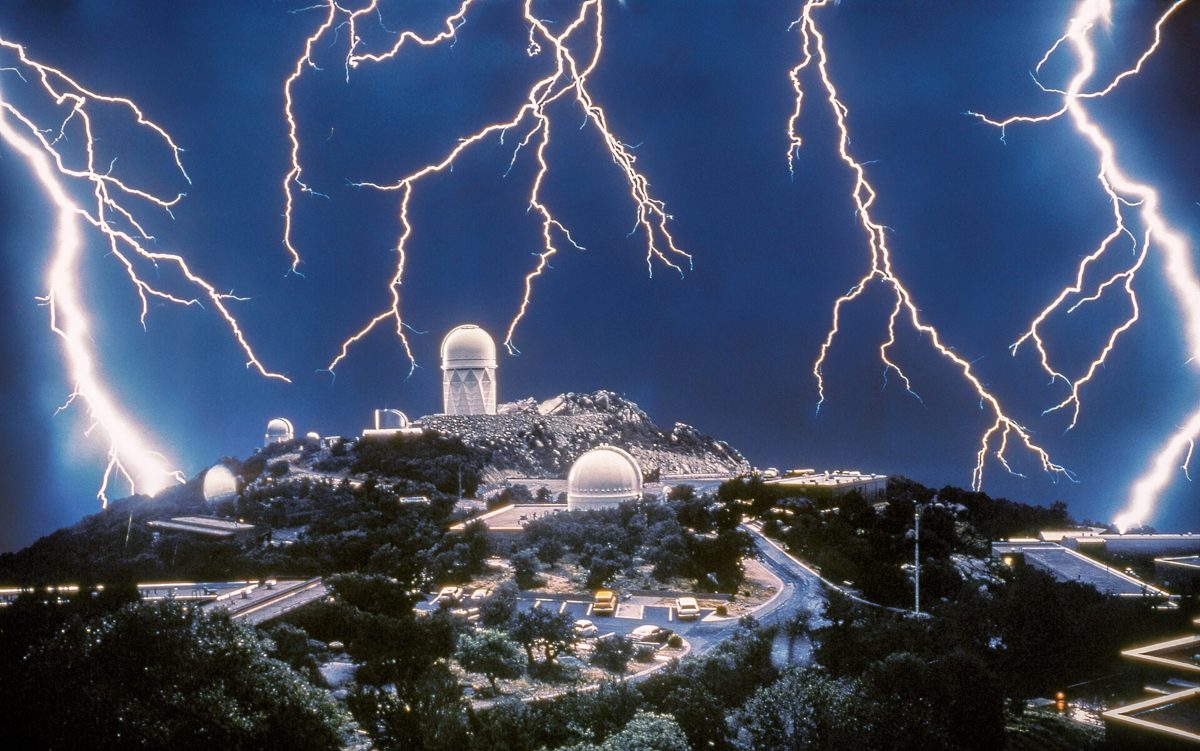
Light from a lightning flash reaches you almost instantly. Sound travels at about 343 metres per second in air at 20 °C, so thunder takes roughly 3 seconds per kilometre, or 5 seconds per mile, to arrive. Count the seconds between the flash and the first rumble: 10 seconds means the strike was about 3 km (2 miles) away; 15 seconds, about 5 km (3 miles). The rule of thumb is simple, and the safety rule built on it is simpler still.
The flash-to-bang rule
- Seconds ÷ 5 = miles. 20 seconds is 4 miles.
- Seconds ÷ 3 = kilometres. 20 seconds is about 6.5 km.
- Start counting at the flash; stop at the first sound of thunder, not the loudest.
The speed of sound changes slightly with temperature (faster in warm air, slower in cold), but never enough to change the rule: at 0 °C the figure is 331 m/s, at 30 °C 349 m/s. Use 3 seconds per kilometre and you are within 5 %.
Why thunder rumbles instead of cracks
A lightning channel is several kilometres long, and every part of it makes sound at the same instant. The part nearest you arrives first as a crack; the parts further along the channel arrive later as a rumble that can last many seconds. A single sharp bang means the whole channel was close. A long, low rumble with no crack means the strike was distant, or the sound came from a channel high in the cloud.
The 30-30 rule: when to go inside, and when to come out
The US National Weather Service's guidance is the one most agencies have adopted. If the count from flash to bang is 30 seconds or less, the strike was within about 10 km (6 miles) and you are inside the storm's strike range: get to a substantial building or a hard-topped vehicle. Then wait 30 minutes after the last thunder before going back out. Most lightning deaths happen before the storm arrives or after people think it has passed, not at its peak. Lightning has struck people more than 15 km (10 miles) from the rain, the so-called bolt from the blue, which is why the NWS reduces the rule to one line: when thunder roars, go indoors.
If you can see lightning but hear nothing
Thunder is rarely audible beyond about 16 km (10 miles), and in a noisy city less. Silent flashes on the horizon at night, often called heat lightning, are just an ordinary storm too far away to hear. It may be moving towards you. Check the rain radar: an active cell shows as a bright core, and the animation tells you which way it is heading.
What to do outdoors when you cannot get inside
- Get off high ground, away from isolated trees, poles and open water.
- Do not shelter under a tree; a strike travels down the trunk and out through the ground.
- Avoid metal fences, railings and wire; they carry current a long way.
- Groups should spread out so a single strike cannot injure everyone.
- A hard-topped car is a good shelter; a tent, a golf cart or a convertible is not.
Reading the storm before it arrives
Thunderstorms show up in the forecast as a chance of showers with a thunder symbol, and in the model data as high convective energy (CAPE). On our city pages the five models are shown side by side; when they disagree on whether storms form, treat the afternoon as uncertain and keep an eye on the sky. When they agree, plan around it.